Showing posts with label 2011 summaries. Show all posts

February 14, 2012

2011 (and some of 2012) in Film

I sat down and started writing a '2011 in Film' blog post at the beginning of January but, looking over my previous year's worth of Itty-Bitty Film Reviews, it struck me as weird that I'd be talking about films like Black Swan and True Grit. Sure, I might have seen them in 2011, but they feel like they belong to the previous year. It was just ... off.

Then I realised, hey, the movie year doesn't end on December 31st, not really. It ends with the Oscars. And, being in Australia, I see most of the prestige 'Oscar Movies,' not in November and December, but in January and February. So I decided to hold off this blog until I'd seen all the contenders for this year, rather than waiting eleven and a half months to talk about 'em. Is that cool with you guys? (Disclaimer: I haven't quite seen every Best Picture nominee, I'm missing Extremely Loud and Incredibly Close, but the trailer for that one looks flat-out appalling, so fuck it.)

All up, it's been a strange old year in film for me, and kind of oddly disappointing. A lot of the movies that other people fell in love with --- The Artist, Hugo, Midnight in Paris, We Need to Talk about Kevin, Drive --- left me a bit cold. While I can honestly say that all five of those films had moments of skill, beauty, or just old-fashioned awesomeness, none of them really coalesced into a great film for me. They felt like less than the sum of their parts, not more.

And, seriously Oscars voters ... War Horse for Best Picture? Yeesh.


My favourite film of the last year (and a bit) was Tinker Tailor Soldier Spy, directed by the Swede Tomas Alfredson (who made the also-fantastic Let the Right One In, track it down if you haven't seen it). Based on the novel by John le Carre, it's an austere spy film, one with lots of hushed conversations and hardly any guns.

Obviously there have been a gazillion spy films over the years, but rarely has one delved so deeply into the question of what it actually is to be a spy. Put simply, a spy must divorce his interior life from his exterior to such an extent, that he can show absolutely nothing to the world. Tinker Tailor explores with wonderful nuance the consequences of this sacrifice. Every character in the entire film is operating under the same stress, but they all deal with it in slightly different ways. While the plot might be about a retired agent being asked to investigate his former colleagues on the sly, the film is really about exploring the inner depths of these most outwardly cautious of men. Gary Oldman has an extraordinary monologue in the middle of the film in which he reveals how savage the effect of his work has been on his home life, while simultaneously admitting that all that work has, for all intents and purposes, been utterly meaningless. It's heartbreaking.

Speaking of Gary Oldman ... I went to see Tinker Tailor with three other guys, and our reactions were hilariously disparate. I loved it, another guy liked it, another guy wasn't quite on board, and one guy hated it with the fire of a thousand suns. Talking to them afterwards, it seemed like our differing takes all hinged on how we took to Oldman's George Smiley. He has one of the most difficult jobs I've ever seen an actor take on: for the film to work, he has to communicate to the audience what Smiley is thinking, while never giving away what he's thinking to the other characters in the scene. To my mind, he succeeds beautifully: I felt I was with Smiley every single step of the way. The guy that hated the film, found the performance flat, and thus found the film boring. Clearly it's not going to be to everybody's taste, but I ate it up.


In the past I've admired Terrence Malick's films, but I haven't really liked them, and I've never had any desire to watch any of them twice. (Disclaimer: I've never seen Badlands.) But The Tree of Life, his epic, allusive, obtuse tone-poem about the 1950's Texas childhood of Jack, played by Sean Penn and Hunter McCracken, left me a snivelling wretch on the floor.

A screenwriting lecturer I had at Uni used to love to say 'The most personal is the most universal.' That guy was kind of a jerk, but I think he was onto something. The details of Jack's childhood and adolescence (and of his adult life) are specific, but, helped by Malick's cosmos-sized diversions, they reach deeper than telling us about one man's life.

Let me use an example to try and explain. My favourite sequence in the film deals with Jack's burgeoning sexuality, and runs thus: Jack watches his mother, who is almost unbearably beautiful, wash her feet with a hose in their front yard. Then their neighbour (another pretty woman, seemingly in her 20's or early 30's) leaves her house. It's a simpler time: she leaves the doors unlocked. Jack sneaks into her home and wanders around the strange, silent rooms, soaking in the details of a woman's life. Upstairs, he goes through her drawers. He takes out one of her slips and lays it on the bed. Then we cut to Jack sprinting madly through some scrub, the slip clutched in his hand: he's stolen it. Reaching a creek, he hides the offending underwear beneath a piece of wood, then thinks better of it and throws it into the water. When he returns home, his mother watches him with her arms folded, disappointed.

Obviously reading it like that doesn't do it justice, but trust me, it's electrifying cinema. Malick perfectly captures Jack's mixture of excitement, confusion, and guilt. And here's the thing: I think everybody who's been through puberty will recognise that blend of emotions in some way. I never did anything like that when I was a kid, but God, I get it. I get it perfectly.

Personal and universal. Right on, screenwriting lecturer douchebag. Right on. The film's not without its flaws --- I could have done without the coda on Memory Beach --- but when it's at its best, it's so much better, clearer, and truer than anything I've seen in years.


My feelings for Werner Herzog's documentary Cave of Forgotten Dreams are just as hard to explain as my feelings for Tree of Life, but they're just as strong. Perfectly sealed for 20,000 years, the Chauvet Caves in France were re-discovered about fifteen years ago. Not having been exposed to the elements, the cave paintings that adorn the walls are still in pristine condition, as vibrant and bright as if they had been drawn yesterday. To protect them from damage, the caves are ordinarily closed to all but a few scientists. How Herzog got permission to get his cameras in there I don't know, but I'm grateful that he did. The film that results is spectacularly beautiful.

As a documentarian, Herzog has a habit of getting on my nerves. His pompous, pseudo-philosophical voice-overs are a bit trying, and his insistence on inserting himself into his movies is often to their detriment. In Cave he has the good sense to shut up (well, for most of the time) and let the pictures tell their own story, aided by interviews with the experts who study them. His most brilliant move, though, was shooting in 3D. I'm a sceptic of that format, but it's perfect here: we get to see how the paintings were thoughtfully designed to meld with the curve of the rocks.

It almost feels too easy: shoot millenia-old rock art, slap some epic orchestral music on the soundtrack, and hey presto, cinematic magic. That's really all that's going on here, but it's more than enough for me.


Now that I think about it, Mike Mills' Beginners stakes out pretty similar thematic territory to Tinker Tailor Soldier Spy: it's all about the schism between our interior lives and the face we present to the world. After the death of his wife, the elderly Hal (Christopher Plummer, charming as hell), having lived a lie his entire life, comes out of the closet and begins to explore his homosexuality for the first time. Meanwhile his son, Oliver (Ewan McGregor), having grown up in a household of secrets and repression, has never learnt to express his feelings to anyone. The father's last years of fearlessness inspire something in the son and after Hal, too, passes away, Oliver begins a halting, awkward relationship with Anna (Mélanie Laurent), a French actress. 

Beginners could so easily be one of those twee indie rom-coms, and there are moments when it veers perilously close to the edge (Not only do Oliver and Anna meet at a fancy-dress party, but she's got laryngitis, so she can only communicate by writing notes! It's so adorable you just want to puke!), but McGregor's performance weights the film, and keeps it from jack-assery. He's a man wracked by pain but unable to do anything about it, or even really let it show. He manages to convey to the audience what he's feeling, even when he doesn't know it himself. Plummer is (rightfully) getting a stack of accolades for this film, but it was McGregor who really blew me away.

There's also these interludes composed of still photographs, advertisements and brochures from different time periods relevant to the film. It's an affectation, sure, but given the themes of the film, it plays beautifully. "This is what families looked like," Oliver intones, over a succession of absurdly smiling models in period advertisements, and when it's cut with flashbacks to Oliver's own childhood, it's heartrending. To the outside world, Oliver's family would have looked perfect, but only those inside it knew it was built on a lie.


It's been a while since I've seen Black Swan (I've loaned my DVD to someone and now I can't remember who. Serious question: have you got it?), and it's such a wacky piece of work that without a re-watch I don't really have anything coherent to say. Instead, let me treat you to this genius flowchart, which pretty much sums it up (you have to scroll down a bit ...). But God, I loved it when I saw it. In case you haven't noticed, 'bonkers' is one of the highest compliments I can ever pay to anything, and Jesus, Black Swan has every bonkers base covered. It's a horror film, that's also hilarious! It's a serious examination of representations of gender, but it doesn't take itself too seriously! Vincent Cassel plays the sleaziest Frenchman in the history of sleazy Frenchmen! Barbara Hershey has creepy-plastic-surgery-face, and paints scary paintings! It's a motherfucking body-horror set in a ballet company (I've checked: this is officially the best idea for a film ever)!

Seriously, what more do you need? Do you need Winona Ryder stabbing herself through the cheek with a nail file? Because it's GOT THAT TOO!

In other notable movie news from the last year: Harry Potter and the Deathly Hallows part 2 hit all the right spots for this mega-nerd (and Matthew Lewis totally pulled off Neville's transformation into a bad-ass motherfucker); Rabbit Hole proved that Nicole's still got it, and that small stories can sometimes be enormous; Attack the Block was savage, funny and really, really smart; and Melancholia married the best on-screen depiction of depression I've ever seen with a goofy end-of-the-world movie, and made it work.

And finally, 2011 gave me a definitive answer to a tough question for any cinephile. In the past when people have asked 'What's the worst movie you've ever seen?' there have been several contenders. Is it The League of Extraordinary Gentlemen? Indiana Jones and the Kingdom of the Crystal Skull? Pirates 3? Transformers 2? I've seen so many dreadful films, how could I pick just one?

Fucking Sucker Punch, that's how. It can't get any worse than that. It is the laziest, emptiest, stupidest piece of cinema that has ever existed and, as cynical as I am, I have too much faith in humankind to think we'll ever be able to match it.

Cheers, JC.


currently reading: Sons and Lovers by D.H. Lawrence
books to go: 91

January 1, 2012

2011, in a List

On a purely numerical level, 2011 was a bit of a disappointment, reading-wise. I only got through 25 books for the whole year, which seems like a pretty low number to me. Yes, some of them were beasts (Anna Karenina, A Dance With Dragons, and Drood), and some of them were dreadful (Gomorrah, Jane Eyre ... and, um, Drood), but still, that's pretty slow going.

Anyway, without further ado, here's the best 10 books I read this year. The title of each book will link you through to my original review.


10. Last and First Men by Olaf Stapledon

I was fairly critical of aspects of this book in my original review, but it's grown on me since. There are images in here that have lingered in my mind since I read it, growing in power. More than anything I think it's the extraordinary scope of Stapledon's vision that has kept my mind returning to his ideas. Uh-oh, I guess I'll have to read it again ...


9. A Dance With Dragons by George R.R. Martin

Conversely, this one has diminished a bit with the passage of time. The ellisions and obfuscations of this volume's various endings get on my nerves more now than they did. Maybe I was blinded by how much of a blast it was returning to Westeros after so long. Still, he belongs on this list for being completely God-damn unputdownable.


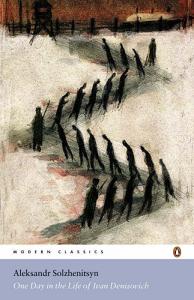
8. One Day in the Life of Ivan Denisovich by Aleksandr Solzhenitsyn

Sometimes telling a story doesn't really matter. Sometimes there are more important things to tell. The historical value of this book is incalculable, because of the rigorous truth that runs through the whole damn thing.


7. The Three Musketeers by Alexandre Dumas

And then, there are books that are pure fun. Musketeers works the same way that Hornblower books work for me, or the way Watership Down still does: it's just an expression of sheer, unadulterated joy. But with swordfights instead of ships, or rabbits. Joy and swordfights ... seriously, what more can I say?


6. The Moonstone by Wilkie Collins

Though I stand by my original disappointment at the denouement, everything that came before that was so brilliant that I can forgive Collins his eccentric ending. Fun, spooky, mysterious ... all in all, a wonderful Victorian detective novel.


5. The March by E.L. Doctorow

Doctorow dramatises Sherman's march by utilising a bewildering array of characters, but he writes with such clarity that we're never confused. Considering he's also using a faux-'period' idiom, that's pretty darn impressive. Adventure and social commentary all rolled up together.


4. Norwegian Wood by Haruki Murakami

I am not as smart, as moony, as wilful, or as Japanese as these characters. But this story still feels like it's mine. Murakami gets under the skins of his late-teen lovers and finds something universal in them. And shit, he writes like a dream.


 3. Bluebeard by Kurt Vonnegut

God, I love Kurt Vonnegut. So wise, so insane. So much friggin' fun. Not only does this examination/excoriation of the world of contemporary art rank as one of his best, but I think Rabo Karabekian, embittered Abstract Expressionist, is one of his most endearing characters.


2. Revolutionary Road by Richard Yates

The more I think about this book, the more extraordinary I find it. I'm not someone who would normally go off the deep end about somebody's writing style (narrative is where I get my biggest kicks), but holy hell, this book is so well-written it hurts. Even when describing things that are tawdry or mundane, every sentence is a jewel that perfectly marries beauty and functionality.


1. Cat's Eye by Margaret Atwood

This book is stunning. If I was making a list of my ten favourite books ever, it would be on that list. And it would be nudging towards a podium finish. It is a marvel, as beautifully written as Yates, as wise as Vonnegut, as universal as Murakami. Just fucking read it, all right? What more do I have to do?


There you have it. It seems unfair to rub it in, but Gomorrah, Drood and Jane Eyre were very trying experiences. They're the dunces of the class.

What does 2012 have in store? Are there any titles still on the list that you can recommend? I'd hazard a guess that Atwood's The Blind Assassin will get a look in at some point this year, but you never know ...

Cheers, JC.


currently reading: Ghostwritten by David Mitchell
books to go: 93

December 22, 2011

My Year of Regrets

Sorry about the silence on here recently. I don't have any other excuse other than to say that it's December, and I work in retail. If you've gone into a shop of any kind in the last two weeks, you'll know what I'm talking about.

On a happier note, that whole 'Death of the Book' thing that people have been going on about doesn't seem to actually be a thing that's happening. At all. At least, not if the store I work in is any sort of a guide. (Shameless plug: Avenue Bookstore in Albert Park, Melbourne. Come see us sometime.) You can't really give an e-book as a gift, can you? Even if it's only because of Christmas, the ink-and-paper kind of book will still be around for a long, long time.

Anyway, it's December, and I'm fucking exhausted (see picture). Hence, no blogs recently.

Starting today, though, you'll be getting a positive avalanche of year-end round-up type posts. Rather than the usual 'I liked/didn't like X, Y and Z,' I thought I'd begin with something slightly different.

This whole 'reading the stuff I already own' project is hard on two levels: one, there's a bunch of stuff I own that I figured I'd never read, ever (*cough* Proust *cough* Homer *cough* shitloads of others as well *cough*) and ploughing through them all will, at times, be a massive chore. But second, and by my reckoning even harder, is the fact that there are heaps of awesome-looking books being released all the time. And, working in a bookstore, I'm aware of every single bloody one of them. And they're always sitting there, right in the corners of my eyes, taunting me. So this first 2011 summation is not about books I've read, it's about books that have come out that I've really wanted to read, and haven't. These are my 'Regrets of the Year.'

The Tragedy of Arthur by Arthur Phillips.

Arthur Phillips is the main character of his own novel, and the first part of the book details his youth, travelling the country with his itinerant, conman father and Shakespeare-obsessed sister. When his father, in jail for life, bequeaths the adult Arthur Phillips a complete 'lost' Shakespeare play called, funnily enough, The Tragedy of Arthur, he has no idea if it's genuine, or if it's his dad's last great sting. Sharing a similar structure to Nabokov's Pale Fire, the main text of the novel is the fictional Arthur Phillips' introduction to the also-fictional Shakespeare play, which is then reproduced in its full five-act glory at the end of the book.

Having the balls to write an entire play in Shakespearian language is one thing, pulling it off to such an extent that critics are raving is quite another. And, now that somebody's thought of it, who doesn't want to read a Shakespeare-type play dealing with Arthurian legend? A number of my colleagues have been going mental about this Tragedy of Arthur, and I really want to join in.

The Submission by Amy Waldman.

After the destruction of the World Trade Center, a competition is held for architects to design the memorial. To ensure the contest's fairness, it's conducted 'blind' --- nobody knows who designed which entry. The jury, which includes survivors and relatives of victims, finally come to a decision, open the envelope containing the winner's name ... and discover that they've chosen a design by an American Muslim. Cue political and emotional fallout.

There hasn't been an enormous amount of serious fiction dealing with the events of 9/11, and what there has been (Extremely Loud and Incredibly Close by Jonathan Safran Foer and Falling Man by Don DeLillo are the two that immediately come to mind), I haven't read. This rather simple concept strikes me as an elegant way of tackling the issues that arose in the aftermath of the attacks. In particular, it raises the question of 'Where Islam stands in relation to the West?' in a more nuanced way than is usual, and it explores the notion that an inclusive multi-culturalism is necessary for the success of pluralist democracies, and more necessary now than ever.

How to Live Safely in a Science Fictional Universe by Charles Yu.

Trying to summarise this insanely-confusing-sounding book without having actually read it is probably the ultimate in foolish attempts at summation. Here goes anyway: our main character, Charles Yu, is a time-travel repairman who lives in his time machine so that time doesn't have to actually move forward. His dad invented time travel, then went missing. While trying to find the one day in the future where he and his father get to meet, Charles winds up stuck in a loop where he's both reading and writing a book called 'How to Live Safely in a Science Fictional Universe.' After that, I've no idea what the hell happens.

That's as much as I've been able to piece together from blurbs, reviews, and talking to a regular at the store who's read it and loved it. With this and Tragedy of Arthur (and Crash), I obviously have a thing for meta-fiction in which the author uses himself as the main character. I do love sci-fi, but a lot of what's coming out these days seems stuck in a bit of a rut, and this one caught my eye because it felt new and different and, bravest of all, fun.

The Toaster Project by Thomas Thwaites.

The only non-fiction on this list, The Toaster Project details Thwaites' attempt to build a toaster from scratch. That sounds reasonably simple, doesn't it? But what if I tell you that the simplest electric toaster he can find has 407 distinct parts? And that when he says 'from scratch,' he really means it? As in, he begins by visiting mines in Wales and digging metals out of the ground. There ain't no 'heading to the hardware store' here, he learns to smelt (I'm not even sure what smelting is), and he makes his own plastic ... pretty badly, if the picture on the cover is anything to go by.

Post industrial revolution, the vast majority of us are so disconnected from the fruits of our labour that the concept of making something with our bare hands is ridiculous. Right now I'm typing on a keyboard, looking at a monitor, and posting on the internet, but I have no clue how any of those things work, or what processes are needed to call them into existence. Thwaites' quest might be a little silly (what good quest isn't?), but I suspect that what this book has to say about the products we use so unthinkingly, and where they come from, might just be fascinating. 

The Marriage Plot by Jeffrey Eugenides.

The other four books on this little list are by authors I've never read before. This one's a bit different. Jeffrey Eugenides' Middlesex is one of the great books of this shiny new millenium, a beautiful novel that links the life story of a transgendered person with the history of the twentieth century, and uses the juxtaposition to shine new light on both. It's really stunning, and if you haven't read it, you damn well should.

So as soon as I heard that Eugenides had a new book coming, The Marriage Plot jumped to the top of my 'read that when I get a chance' pile. Everybody at the store was just as excited as me. We badgered the publisher's rep to get us advance copies. We chose it as the monthly read for our in-store bookclub. We were pumped.

Then it arrived, and people started reading it, and word trickled back to me. 'It's ... okay,' was the verdict. 'But it's no Middlesex.' And then I started reading the reviews. If I had to sum up the literary world's reaction to The Marriage Plot in one word, it would be 'disappointing.' My regret with this one is more to do with timing: I should have struck when the iron was hot, reading it when my expectation was peaking. Now it's no longer at the head of the queue of must-reads, and it'll probably be years, rather than months, before I bother. To feel this letdown by a book I haven't even read yet is probably stupid, but there it is.

So those are my top five regrets from 2011. When I get around to reading them, who knows whether I'll like them or not ... but until then I can still convince myself that they're five instant classics of indescribable beauty. (Not like Proust or Homer. That shit will never last ...)

Anybody got any recommendations for more good 2011 reads? Taunt me by sharing them in the comments. Please describe what's great about them in excruciating detail. I love it.

Cheers, JC.


currently reading: Stand on Zanzibar by John Brunner
books to go: 94