January 1, 2012

2011, in a List

On a purely numerical level, 2011 was a bit of a disappointment, reading-wise. I only got through 25 books for the whole year, which seems like a pretty low number to me. Yes, some of them were beasts (Anna Karenina, A Dance With Dragons, and Drood), and some of them were dreadful (Gomorrah, Jane Eyre ... and, um, Drood), but still, that's pretty slow going.

Anyway, without further ado, here's the best 10 books I read this year. The title of each book will link you through to my original review.


10. Last and First Men by Olaf Stapledon

I was fairly critical of aspects of this book in my original review, but it's grown on me since. There are images in here that have lingered in my mind since I read it, growing in power. More than anything I think it's the extraordinary scope of Stapledon's vision that has kept my mind returning to his ideas. Uh-oh, I guess I'll have to read it again ...


9. A Dance With Dragons by George R.R. Martin

Conversely, this one has diminished a bit with the passage of time. The ellisions and obfuscations of this volume's various endings get on my nerves more now than they did. Maybe I was blinded by how much of a blast it was returning to Westeros after so long. Still, he belongs on this list for being completely God-damn unputdownable.


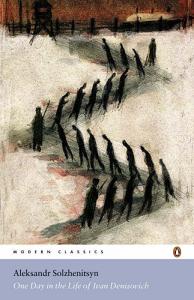
8. One Day in the Life of Ivan Denisovich by Aleksandr Solzhenitsyn

Sometimes telling a story doesn't really matter. Sometimes there are more important things to tell. The historical value of this book is incalculable, because of the rigorous truth that runs through the whole damn thing.


7. The Three Musketeers by Alexandre Dumas

And then, there are books that are pure fun. Musketeers works the same way that Hornblower books work for me, or the way Watership Down still does: it's just an expression of sheer, unadulterated joy. But with swordfights instead of ships, or rabbits. Joy and swordfights ... seriously, what more can I say?


6. The Moonstone by Wilkie Collins

Though I stand by my original disappointment at the denouement, everything that came before that was so brilliant that I can forgive Collins his eccentric ending. Fun, spooky, mysterious ... all in all, a wonderful Victorian detective novel.


5. The March by E.L. Doctorow

Doctorow dramatises Sherman's march by utilising a bewildering array of characters, but he writes with such clarity that we're never confused. Considering he's also using a faux-'period' idiom, that's pretty darn impressive. Adventure and social commentary all rolled up together.


4. Norwegian Wood by Haruki Murakami

I am not as smart, as moony, as wilful, or as Japanese as these characters. But this story still feels like it's mine. Murakami gets under the skins of his late-teen lovers and finds something universal in them. And shit, he writes like a dream.


 3. Bluebeard by Kurt Vonnegut

God, I love Kurt Vonnegut. So wise, so insane. So much friggin' fun. Not only does this examination/excoriation of the world of contemporary art rank as one of his best, but I think Rabo Karabekian, embittered Abstract Expressionist, is one of his most endearing characters.


2. Revolutionary Road by Richard Yates

The more I think about this book, the more extraordinary I find it. I'm not someone who would normally go off the deep end about somebody's writing style (narrative is where I get my biggest kicks), but holy hell, this book is so well-written it hurts. Even when describing things that are tawdry or mundane, every sentence is a jewel that perfectly marries beauty and functionality.


1. Cat's Eye by Margaret Atwood

This book is stunning. If I was making a list of my ten favourite books ever, it would be on that list. And it would be nudging towards a podium finish. It is a marvel, as beautifully written as Yates, as wise as Vonnegut, as universal as Murakami. Just fucking read it, all right? What more do I have to do?


There you have it. It seems unfair to rub it in, but Gomorrah, Drood and Jane Eyre were very trying experiences. They're the dunces of the class.

What does 2012 have in store? Are there any titles still on the list that you can recommend? I'd hazard a guess that Atwood's The Blind Assassin will get a look in at some point this year, but you never know ...

Cheers, JC.


currently reading: Ghostwritten by David Mitchell
books to go: 93

December 31, 2011

Stand on Zanzibar (#94)

Stand on Zanzibar by John Brunner.


What I said then:

Classic sci-fi that, according to the blurb at least, seems strangely prescient.

What I say now:

Oh. What a fool I am.

After my disastrous experience reading Jane Eyre over the Christmas period last year, when this December rolled around I thought 'How 'bout a sci-fi classic this time? How dense and difficult could it possibly be? It's probably an action-packed romp!'

I picked the wrong God-damn sci-fi classic. I was hoping for something as fun and exhilarating as The Stars My Destination, and I didn't get it.

Written in the late sixties but set in 2010, Brunner's world is grossly overpopulated. In the west, Eugenics Boards give licenses to bear children only to those with clean genes. Post-colonial Africa can't feed itself. Nobody knows what China's up to, as it has closed its borders. Psychologically unable to deal with the crowding in the cities, people frequently snap and run amok (becoming 'mukkers'), killing, starting riots, and generally going off the deep end. The plot of the book, such as it is, centres on two room-mates: Norman, an African-American, heads a giant American corporation's plan to basically buy an entire African country; and Donald, who is plucked from his indolent lifestyle and transformed into an assassin and spy, then sent to abduct a third-world geneticist who's made a startling discovery.

I say "the plot of this book, such as it is" because Brunner has a pretty unique approach to narrative: the whole thing is made up of hundreds of miniscule chapters, many of which have no connection (or very little connection) to anything else that's happening elsewhere in the novel. Often the various narratives stop dead so we can be treated to an avalanche of snippets from TV shows, or conversations on the street, or advertisements, or the collected works of an obnoxious social theorist named Chad C. Mulligan, all offered in a context-less blitz on the senses. This is a very deliberate tactic on Brunner's part: as well as allowing him to give a wide-ranging view of his imagined world, its disorientating effect is deliberately supposed to provoke a feeling of 'information overload' in the reader. There exists in the novel a super-computer named Shalmaneser which processes vast quantities of information from all over the world, looking for patterns. The layout of the novel forces us, the reader, to attempt to do the same. I guarantee you won't know who everybody is all the time, but that's okay, you're not really supposed to.

Unfortunately, that made it pretty much the worst possible book for me to read in the midst of the Christmas Retail Insanity I've been living through for the last few weeks. If I'd been a bit more alert and attentive I might have made more connections, understood it better, and liked it more. As I was reading, twisting the strands of the different stories together, I kept hoping that all this information would ultimately cohere into a satisfying novel.

Not much, however, could have made me satisfied with the way that Norman and Donald's twin narratives both petered out with endings that were not remotely satisfying. Norman's tale, in particular, had a 'Seriously?!?!?' ending, that made me feel that slogging through 650 pages (maybe 150 of which featured Chad Fucking Mulligan) to get there. Very briefly: the African nation Beninia that Norman's company wants to both exploit and help (for a pretty cynical book, the corporation's motives are strangely un-arsehole-ish), has a history of non-violence that is remarkable --- despite grinding poverty and multiple warring tribal groups spilling over the borders, there hasn't been a single murder in fifteen years --- and which needs an explanation. And the explanation sucked big time.

While certainly interesting, I could only recommend this one to big sci-fi fans who are willing to find pleasure in the incidental details of an imaginary world. Brunner's setting is really very convincing, well thought through and imaginative. The way he applies that setting to the telling of a story is less convincing.

Cheers, JC.


about to read: Ghostwritten by David Mitchell
books to go: 93

December 22, 2011

My Year of Regrets

Sorry about the silence on here recently. I don't have any other excuse other than to say that it's December, and I work in retail. If you've gone into a shop of any kind in the last two weeks, you'll know what I'm talking about.

On a happier note, that whole 'Death of the Book' thing that people have been going on about doesn't seem to actually be a thing that's happening. At all. At least, not if the store I work in is any sort of a guide. (Shameless plug: Avenue Bookstore in Albert Park, Melbourne. Come see us sometime.) You can't really give an e-book as a gift, can you? Even if it's only because of Christmas, the ink-and-paper kind of book will still be around for a long, long time.

Anyway, it's December, and I'm fucking exhausted (see picture). Hence, no blogs recently.

Starting today, though, you'll be getting a positive avalanche of year-end round-up type posts. Rather than the usual 'I liked/didn't like X, Y and Z,' I thought I'd begin with something slightly different.

This whole 'reading the stuff I already own' project is hard on two levels: one, there's a bunch of stuff I own that I figured I'd never read, ever (*cough* Proust *cough* Homer *cough* shitloads of others as well *cough*) and ploughing through them all will, at times, be a massive chore. But second, and by my reckoning even harder, is the fact that there are heaps of awesome-looking books being released all the time. And, working in a bookstore, I'm aware of every single bloody one of them. And they're always sitting there, right in the corners of my eyes, taunting me. So this first 2011 summation is not about books I've read, it's about books that have come out that I've really wanted to read, and haven't. These are my 'Regrets of the Year.'

The Tragedy of Arthur by Arthur Phillips.

Arthur Phillips is the main character of his own novel, and the first part of the book details his youth, travelling the country with his itinerant, conman father and Shakespeare-obsessed sister. When his father, in jail for life, bequeaths the adult Arthur Phillips a complete 'lost' Shakespeare play called, funnily enough, The Tragedy of Arthur, he has no idea if it's genuine, or if it's his dad's last great sting. Sharing a similar structure to Nabokov's Pale Fire, the main text of the novel is the fictional Arthur Phillips' introduction to the also-fictional Shakespeare play, which is then reproduced in its full five-act glory at the end of the book.

Having the balls to write an entire play in Shakespearian language is one thing, pulling it off to such an extent that critics are raving is quite another. And, now that somebody's thought of it, who doesn't want to read a Shakespeare-type play dealing with Arthurian legend? A number of my colleagues have been going mental about this Tragedy of Arthur, and I really want to join in.

The Submission by Amy Waldman.

After the destruction of the World Trade Center, a competition is held for architects to design the memorial. To ensure the contest's fairness, it's conducted 'blind' --- nobody knows who designed which entry. The jury, which includes survivors and relatives of victims, finally come to a decision, open the envelope containing the winner's name ... and discover that they've chosen a design by an American Muslim. Cue political and emotional fallout.

There hasn't been an enormous amount of serious fiction dealing with the events of 9/11, and what there has been (Extremely Loud and Incredibly Close by Jonathan Safran Foer and Falling Man by Don DeLillo are the two that immediately come to mind), I haven't read. This rather simple concept strikes me as an elegant way of tackling the issues that arose in the aftermath of the attacks. In particular, it raises the question of 'Where Islam stands in relation to the West?' in a more nuanced way than is usual, and it explores the notion that an inclusive multi-culturalism is necessary for the success of pluralist democracies, and more necessary now than ever.

How to Live Safely in a Science Fictional Universe by Charles Yu.

Trying to summarise this insanely-confusing-sounding book without having actually read it is probably the ultimate in foolish attempts at summation. Here goes anyway: our main character, Charles Yu, is a time-travel repairman who lives in his time machine so that time doesn't have to actually move forward. His dad invented time travel, then went missing. While trying to find the one day in the future where he and his father get to meet, Charles winds up stuck in a loop where he's both reading and writing a book called 'How to Live Safely in a Science Fictional Universe.' After that, I've no idea what the hell happens.

That's as much as I've been able to piece together from blurbs, reviews, and talking to a regular at the store who's read it and loved it. With this and Tragedy of Arthur (and Crash), I obviously have a thing for meta-fiction in which the author uses himself as the main character. I do love sci-fi, but a lot of what's coming out these days seems stuck in a bit of a rut, and this one caught my eye because it felt new and different and, bravest of all, fun.

The Toaster Project by Thomas Thwaites.

The only non-fiction on this list, The Toaster Project details Thwaites' attempt to build a toaster from scratch. That sounds reasonably simple, doesn't it? But what if I tell you that the simplest electric toaster he can find has 407 distinct parts? And that when he says 'from scratch,' he really means it? As in, he begins by visiting mines in Wales and digging metals out of the ground. There ain't no 'heading to the hardware store' here, he learns to smelt (I'm not even sure what smelting is), and he makes his own plastic ... pretty badly, if the picture on the cover is anything to go by.

Post industrial revolution, the vast majority of us are so disconnected from the fruits of our labour that the concept of making something with our bare hands is ridiculous. Right now I'm typing on a keyboard, looking at a monitor, and posting on the internet, but I have no clue how any of those things work, or what processes are needed to call them into existence. Thwaites' quest might be a little silly (what good quest isn't?), but I suspect that what this book has to say about the products we use so unthinkingly, and where they come from, might just be fascinating. 

The Marriage Plot by Jeffrey Eugenides.

The other four books on this little list are by authors I've never read before. This one's a bit different. Jeffrey Eugenides' Middlesex is one of the great books of this shiny new millenium, a beautiful novel that links the life story of a transgendered person with the history of the twentieth century, and uses the juxtaposition to shine new light on both. It's really stunning, and if you haven't read it, you damn well should.

So as soon as I heard that Eugenides had a new book coming, The Marriage Plot jumped to the top of my 'read that when I get a chance' pile. Everybody at the store was just as excited as me. We badgered the publisher's rep to get us advance copies. We chose it as the monthly read for our in-store bookclub. We were pumped.

Then it arrived, and people started reading it, and word trickled back to me. 'It's ... okay,' was the verdict. 'But it's no Middlesex.' And then I started reading the reviews. If I had to sum up the literary world's reaction to The Marriage Plot in one word, it would be 'disappointing.' My regret with this one is more to do with timing: I should have struck when the iron was hot, reading it when my expectation was peaking. Now it's no longer at the head of the queue of must-reads, and it'll probably be years, rather than months, before I bother. To feel this letdown by a book I haven't even read yet is probably stupid, but there it is.

So those are my top five regrets from 2011. When I get around to reading them, who knows whether I'll like them or not ... but until then I can still convince myself that they're five instant classics of indescribable beauty. (Not like Proust or Homer. That shit will never last ...)

Anybody got any recommendations for more good 2011 reads? Taunt me by sharing them in the comments. Please describe what's great about them in excruciating detail. I love it.

Cheers, JC.


currently reading: Stand on Zanzibar by John Brunner
books to go: 94

November 18, 2011

Revolutionary Road (#95)

Revolutionary Road by Richard Yates


What I said then: 

The absolute favourite book of one of my colleagues, I’m not letting myself watch the movie until I read it.

What I say now:

A large part of me was dreading reading Revolutionary Road, because it's the kind of book I tend to be pretty dismissive about: a high-minded, capital L 'Literary', examination of white, middle-class suburban life. I'm not saying a book like that can't be good (Revolutionary Road, as I'm about to tell you, is very God-damn good indeed), they're just not really my thing. I find them dull. In fact, I tend to find them just as dull as I'd find their characters, if I ever met them in real life. Yes, I'm looking at you, Jonathan Franzen. And Richard Ford. And the second, way-less-interesting, half of White Teeth. And I could go on and on.

(There's an element to this dislike which I'll probably go into with my therapist one day, to whit: I'm not interested in books about ... well ... me. White, middle-class people have all sorts of psychological weirdness going on beneath their seemingly calm exteriors? Yeah, no shit, I already know that because I've been paying attention to myself all this time. Come on, novelists, I want you to tell me something I don't already know.)

So ... I approached Rev Road with trepidation. And I finished it completely blown away. This is truly one of the great novels of the 20th century.

For those that, like me, haven't seen the movie, the fairly simple plot runs as follows: It's the late 50's and Frank and April Wheeler live in a neat suburban home. Frank takes the train into New York every morning for work, while April stays home with their two small children. And Frank and April hate their lives. It's much more complicated than that, obviously, but at heart the novel is about the couple's distaste for the pristine prison they've constructed for themselves, and the self-loathing caused by their failed attempts to escape it. There's nothing particularly new or exciting about the plot of Revolutionary Road. It's in the execution that it's electrifying.

When they write, nearly every author (and definitely every author working in 'realist fiction') is attempting to do something that ought to be impossible. They're trying to combine scratches of ink on paper in such a way that they can conjure up some kind of emotional truth, some kind of imaginary reality. And they're trying to do it so well that you, the reader, forget about the ink and the paper and buy into the emotion of things that never happened. The best way to make us forget the ink and paper is to write with clarity, never giving our brains that jolt that makes us look away from the page, that makes us remember that it's all imaginary.

Yates writes with a clarity that borders on perfection. Because Revolutionary Road exists, I kind of feel like I should never bother reading another realist novel, and that nobody should ever bother trying to write one, because it's simply not possible that it'll ever be done this well again. With brutal, forensic precision, Yates is able to delve right inside the heads of his characters and bring their psyches, kicking and screaming, into the light. Each word is the right word. Each sentence perfectly captures a single idea. Each line of dialogue they speak, each decision they make, each regret they harbour, adds its own little piece to our understanding of Frank and April.

To give give just one small example: several times throughout the novel, Frank changes his mind about things within the scene that we're reading. At the start of the scene, he's convinced of one thing, and by the end he's convinced himself of its exact opposite. In a lot of novels that might seem muddled or unclear to the reader, but it's because of Yates' clarity that he gets away with it. We understand Frank perfectly at both ends of the spectrum, and we've understood him at every single moment as he's slowly changed his views. Even though Frank himself is confused by his own addled thoughts, we readers never are.

If I had one small criticism, it would be that in the second half of the novel Yates begins to broaden his story out beyond Frank and April, letting other characters have their turns under his knife. It's not that those sections were weaker, it's just that part of me wishes that we'd stayed trapped with Frank and April through to the bitter end. Though, to be fair, that might have made it too harrowing to finish.

Anyway, read it. It's not a book that will entertain you, really (it took me a long time to read because I had to take a break after each chapter and think about it for a while), but it is a book that will astonish you.

(Oh, and as for the movie? I don't think I'll even bother now. The thing Revolutionary Road does so magnificently is the one thing that books will always be able to do better than movies; that is, get inside a character's head. Honestly, I can't even really fathom why you'd even try to adapt it, or how.) 

Cheers, JC.


about to read: Stand on Zanzibar by John Brunner
books to go: 94

October 18, 2011

Bluebeard (#96)

Bluebeard by Kurt Vonnegut


What I said then: 

Vonnegut’s a huge favourite of mine, to the point that I’ve had to ration his books out so that I don’t find myself with fifty years left to live but no new Vonnegut to read.

What I say now:

Of course, there's always a chance that I'll be hit by a car tomorrow. And as I lie on the road my last thought will surely be: Consarn it, now I wish I'd read every last Kurt Vonnegut novel as soon as I fell in love with the guy.

But at least I'll have read Bluebeard.

After Drood I figured I'd treat myself to one of the 'sure things' that's still on my shelves, to perk me up a bit, and Bluebeard didn't disappoint. If you haven't read Vonnegut before, his tone of voice is difficult to describe: he's like the perfect uncle you wish you had, both wise-cracking and wise. Honestly, his writing is a mess of contradictions, managing to be simultaneously hilarious and tragic, serious and silly, and best of all, sane and insane at the same time. And for as long as you're reading a Vonnegut book, that feels like the only possible way to respond to this mad, beautiful, cruel world we live in. He's a magician.

Rabo Karabekian, an Armenian-American Abstract Expressionist painter, has a cameo in Vonnegut's Breakfast of Champions (his scene in that book is a favourite of mine), and is placed centre stage here. After the particular brand of paint he used for his art turns out to fall off the canvas after a while, he has become a laughing stock and is living out the last years of his life in relative seclusion. His comfortable decline is interrupted when a bossy know-it-all widow named Circe Berman shows up on his private beach and cajoles him into writing his autobiography. Bluebeard is that book, and it swings between Karabekian describing his ill-starred youth and relating the philosophical disagreements that arise between himself and Berman, who becomes his house-guest.

Spicing the book with occasional historical figures (Jackson Pollock figures prominently), Vonnegut gives us a potted history of the beginning of the Abstract Expressionist movement. However, it's the running commentary provided by the arguing Karabekian and Berman (she can't stand his collection of paintings, he can't satisfactorily explain them) which is the most fun. Their relationship --- snarky and adversarial, but still needy --- is a delight.

Sorry, this is a pretty crap review. I don't really know how to explain the appeal of Kurt Vonnegut to me. I've loved every one of his books that I've read. Reading the last third of Bluebeard on the train back from Wangaratta I laughed out loud on several occasions, and had to wipe tears from my eyes on several more. But for the life of me I can't dissect how he does it. Or maybe I don't want to dissect it.

So ... look. Go to a bookshop. Pick up a copy of Slaughterhouse Five. (That was the first book of his that I ever read, and it blew my mind apart. In a good way.) Stand in the store and read it until you come to the words "It ends like this: Poo-tee-weet?" In my edition, that's sixteen pages in. If, at that point, you haven't fallen head over heels for Kurt Vonnegut the way that I did (and still do), then I feel sorry for you. You won't know what you're missing.

Cheers, JC.


about to read: Revolutionary Road by Kurt Vonnegut
books to go: 95